Loading…
Live 02:06:18 UTCReference observer 51.4779° N 0.0000° E Greenwich
Moon Phase Today
This lunationScroll to play this month, as the sky runs it
The lunation now running
—
New Moon
- Day of this lunation
- 00.00 / 29.53
- Disc lit
- —
- Elongation
- —
- Distance
- —
- Apparent size
- —
- Moon in
- —
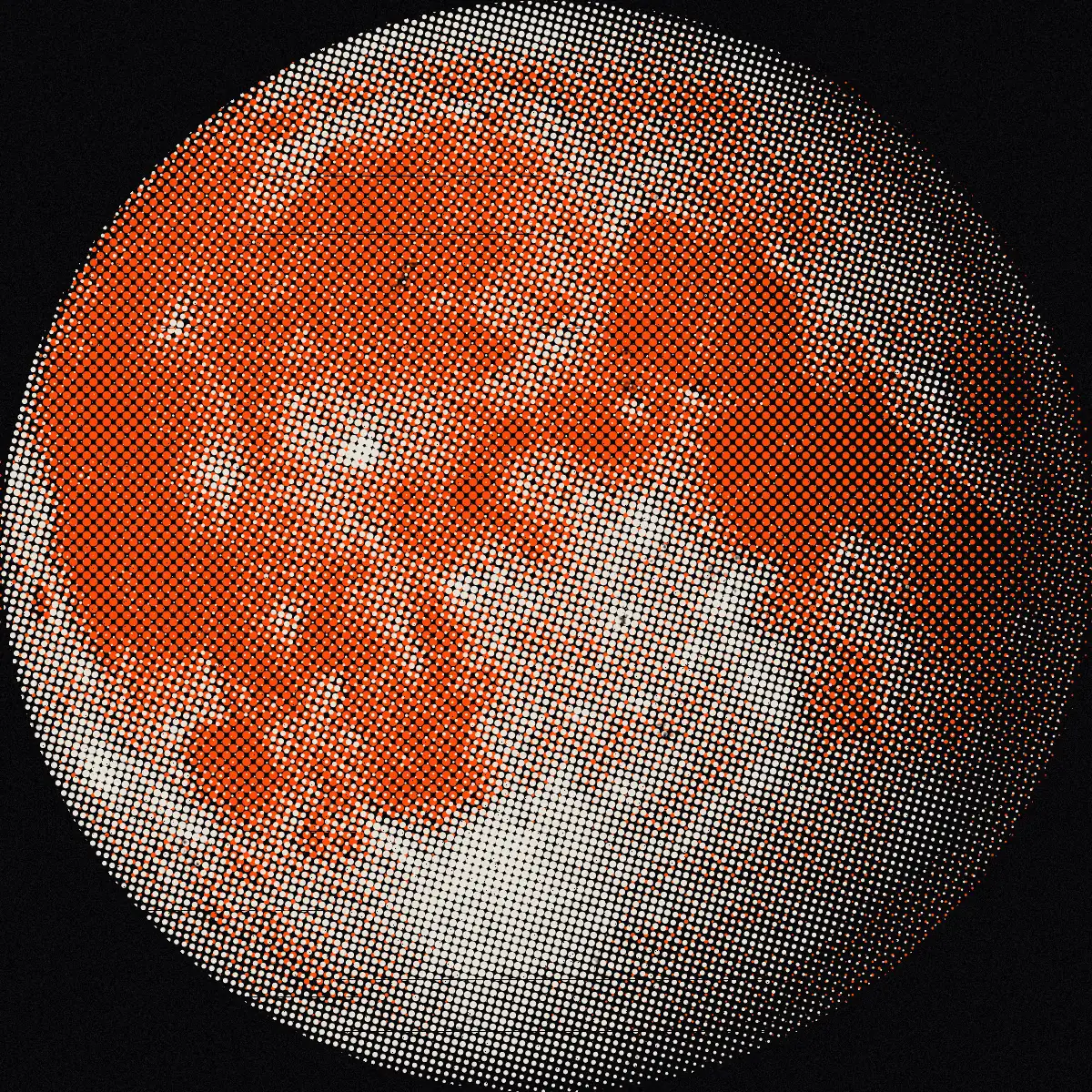
- Full Moon
- 98.3% illuminated
- Lunar age
- 13d 14:09:36
- Elongation
- 165.67°
- Distance
- —
- Speed vs Earth
- —
- Next perigee
- —
- Next full moon
- 01d 02:05:57
- Next new moon
- 15d 04:56:24
Lunar phase, illumination and the next principal phases — computed from the standard astronomical series, so the page is right whether or not anything is reachable.
See current phase04 / The monthOne frame a day
Monthly Calendar
Every phase, every day — mapped to precision.
October 2026
This month's full moon: Hunter’s Moon. The discs are printed in its colour.
Each disc is drawn from that day's computed illumination at midday UTC. The four principal phases are marked; tap any day for its exact figures.
01 / TonightPrime meridian · times in UTC
Current Phase
Live lunar figures, computed from the standard astronomical series. Rise and set times are for the prime meridian.
Full Moon
“Illumination & Clarity — reveal your true self.”
The moon opposite its zodiac sign — peak emotional expression.
98% illuminatedLive
- Date
- 25 Oct 2026
- Moonrise
- 16:00 UTC
- Moonset
- 05:48 UTC
- Distance
- 373,238 km
- Sign
- Moon in Aries
- Age
- Lunar age: day 13.59 of cycle
Full moon in 1 days / New moon in 15 days
Formed ~4.51 billion years ago · One lunar day 29 d 12 h 44 m
Data from 25 October 2026, 02:06 UTC
02 / The months of the MoonOne orbit, measured five ways
One orbit,
five months.
A month is one trip round the Earth, but its length depends on what the trip is measured against. Against the Sun it is the synodic month, the one the phases follow and the one this page plays. Against the stars it is the sidereal month, two days shorter, because the Earth has moved along its own orbit in the meantime and the Moon has to catch the Sun up.
The phases keep the synodic month. Eclipses keep the draconic. Supermoons keep the anomalistic.
- 29.5306daysSynodic month
New moon to new moon: the phases, the spring and neap tides, and the lunar calendars all run on it.
- 27.3217daysSidereal month
Back against the same stars. The Moon has completed one turn, but the Sun has moved on.
- 27.5546daysAnomalistic month
Perigee to perigee. A full moon that falls near perigee is the one called a supermoon.
- 27.2122daysDraconic month
Node to node, where the Moon crosses the plane of the Earth's orbit. Eclipses happen only near a node.
- 27.3216daysTropical month
Equinox to equinox. About seven seconds shorter than the sidereal month, because the equinoxes drift.
No two lunations are the same lengthComputed on your device
25 lunations, new moon to new moon
03 / Coming upCounting down to the second
Upcoming Events
Mark your calendar for the next celestial milestones.
- Next Full Moon26 Oct 2026, 04:12 UTC01d 02:05:57
- Next New Moon9 Nov 2026, 07:02 UTC15d 04:56:24
Advanced lunar & solar data
Moonrise and moonset for the prime meridian, the Moon’s distance, its zodiac sign, and the next eclipses.
- Next lunar eclipsePenumbral20 Feb 2027, 23:12 UTC118d 21:06:25
- Next solar eclipseAnnular6 Feb 2027, 15:59 UTC104d 13:53:14
05 / The wider skySame ephemeris as the Moon
The Wider Sky
The Sun, the planets and Pluto — where each one is, right now.
Sun
DaylightA G-type main-sequence star holding 99.86% of the solar system's mass. Everything else here is lit by it.
Below the horizon.
- From Earth
- 148.8 million km · 0.995 AU
- Light delay
- 8.3 min
- Magnitude
- -26.75
- Constellation
- Virgo
- Altitude
- -40.9°
- Azimuth
- 49.1°
- Rises
- 06:41 UTC
- Sets
- 16:46 UTC
- Highest
- 11:44 UTC
- Diameter
- 1,391,400 km
- Mass
- 332,946× Earth
- Gravity
- 274.42 m/s² · 27.98× Earth
- Rotation
- 25.4 days
Positions, distances, magnitudes and rise times are computed live for the prime meridian. The globe is drawn from that body's surface map, lit from the real direction of the Sun and turned the way the body actually turns. Day is one sunrise to the next, which is not the rotation above it — Mercury turns in 59 days but its day lasts 176, and Venus turns backwards, so its day is shorter than either figure. Day and gravity are derived from the diameter, mass and rotation rather than quoted, so they cannot drift from them. Diameter, rotation and mass are from the NASA planetary fact sheets; surface maps by Solar System Scope (CC BY 4.0), except Pluto, from NASA/JHUAPL/SwRI New Horizons.
06 / What this phase meansPrinted in tonight's colour
What this phase means
Illumination & Clarity — reveal your true self.
The moon opposite its zodiac sign — peak emotional expression.
Explore Full Moon collection07 / QuestionsAnswered from tonight's sky
Moon phase questions, answered from tonight's sky
As of 25 October 2026 (UTC) the Moon is a Full Moon, 98.3% illuminated, 13.59 days into its cycle and waxing — growing towards full.
Tonight the Moon is a Full Moon at 98.3% illumination. The next full moon is 26 October 2026 (1 day away) and the next new moon is 9 November 2026 (15 days away).
The next full moon falls on 26 October 2026 at 04:12 UTC.
The next new moon falls on 9 November 2026 at 07:02 UTC.
New Moon, Waxing Crescent, First Quarter, Waxing Gibbous, Full Moon, Waning Gibbous, Last Quarter and Waning Crescent. One full cycle — a synodic month — takes 29.53 days.
Illumination shifts by roughly 6–8% a day, so the visible shape changes noticeably overnight. The four principal phases fall about 7.4 days apart.
Phases are computed from the standard astronomical series (VSOP87/ELP) in your browser and on our servers, not fetched from a third party. Checked against the US Naval Observatory's published table for 2026, all fifty principal phases agree to within 1.3 minutes.
Every Moontians piece is mapped to a lunar phase, and drops are timed to the cycle. The phase above is the same value the shop uses to decide what it puts in front of you.